Preface
Island of Tears
An Insider's Account of a Fighter's Journey
Nestled in the heart of the Indian Ocean like a hidden teardrop, this island's history too is steeped in tears — that island is Sri Lanka. From a distance, it appears to be a paradise of lush greenery. Its mountains, rivers and paddy fields seem like heaven on earth. Yet beneath that beauty burned an unrelenting fire — the deep fracture of ethnic war.
In Sinhala, Sri Lanka; in Tamil, Ilangai — different names, one land. Once celebrated by the world as the "Granary of the East" and the "Pearl of the Indian Ocean," its deep harbours and strategic geography made it a coveted prize — from the ancient Silk Road to today's maritime trade routes.
Sri Lanka's history stretches back three thousand years. Known in ancient Tamil Sangam literature as "Eelam" (the ancient Tamil name for Sri Lanka), the land shared deep cultural ties with South India. In the beginning, Sinhalese and Tamils were united under a shared Shaivite tradition; the bells of temples rang in the same key. But time carried the seeds of change.
At the centre of that change stood King Devanampiya Tissa. In 250 BCE, Mahinda — monk and son of Emperor Ashoka of the Indian subcontinent — arrived at Mihintale mountain to spread Buddhism. That day changed the destiny of the island forever. Mahinda's words touched the king's heart; Tissa embraced Buddhism. The Sinhalese people followed. In that moment, Sri Lanka's course turned onto a new path.
Under Buddhism's influence, the paths of the two communities began to diverge. In time, certain monks spread the false belief that "the only way to protect Buddhism is to oppose the Tamils of the north and east." That mistaken conviction planted a deep divide — one that would, centuries later, ignite into an inferno at the island's heart.
Foreign invasions of Sri Lanka began before 205 BCE and continued until 1409 CE — eleven incursions in all, each leaving its mark in the island's blood and memory. Then came the dark shadow of colonialism. The Portuguese arrived in 1505, followed by the Dutch, then the British. Under the guise of trade, education and religion, they quietly dismantled Sri Lanka's identity. "Divide and rule" was their sharpest policy. By driving wedges between Tamils and Sinhalese, they sowed a deep fracture in the island's heart.
When Sri Lanka gained independence in 1948, that colonial fracture was still very much alive. The slogan "One Nation — One Language" became a symbol of exclusion for the Tamil people. In education, employment and governance, Tamils were gradually pushed aside. Non-violent protest was met with treachery and was crushed. Ethnic massacres followed. There was only one answer — to take up arms.
The Rise of the Liberation Tigers
In the early 1970s, from the dense forests of northern Sri Lanka, a new force emerged — the Liberation Tigers of Tamil Eelam (LTTE). At the head of this movement stood Velupillai Prabhakaran.
This was no ordinary armed struggle. This was a people's fight for their identity, their land, their language. Thousands of young men and women sacrificed their youth — its dreams and aspirations — on the altar of liberation.
Beginning as a small guerrilla group, the movement was transformed over time, under Prabhakaran's iron-willed leadership, into a full-fledged military organisation.
Its structure was as follows:
Leader → Central Secretariat → Six Primary Departments
Political Wing
Military (Land · Sea · Air)
Judicial Administration
Finance
Police
Intelligence
Beneath these, more than a hundred sub-divisions.
This was not merely an armed movement — it was a fully functioning administrative state; the beating heart of an unrecognised nation.
The LTTE's discipline and order astonished the world. Every fighter wore a cyanide capsule around their neck — if captured, death was a duty. Women fought alongside men on the front lines. The "Black Tigers" (Karum Pulikal) — their suicide attack unit — became the symbol of strikes that shook the enemy to its core.
India, too, at one point provided training and weapons to the Tigers for its own geopolitical reasons. But later, in a tragic twist of history, that same nation turned against them. In 1987, the Indian Peace Keeping Force (IPKF) was pushed into Sri Lanka under the India–Sri Lanka Accord. Those who came in the name of "peace" committed genocide against the very people they claimed to protect. Hospitals, schools and residential areas — all came under attack. Thousands died; thousands of women were subjected to violence. When the IPKF withdrew in 1990, the Tamil people of the north and east were left carrying deep wounds — physical and psychological. That era stands as one of the darkest chapters in Sri Lanka's internal conflict.
Dream and Grave
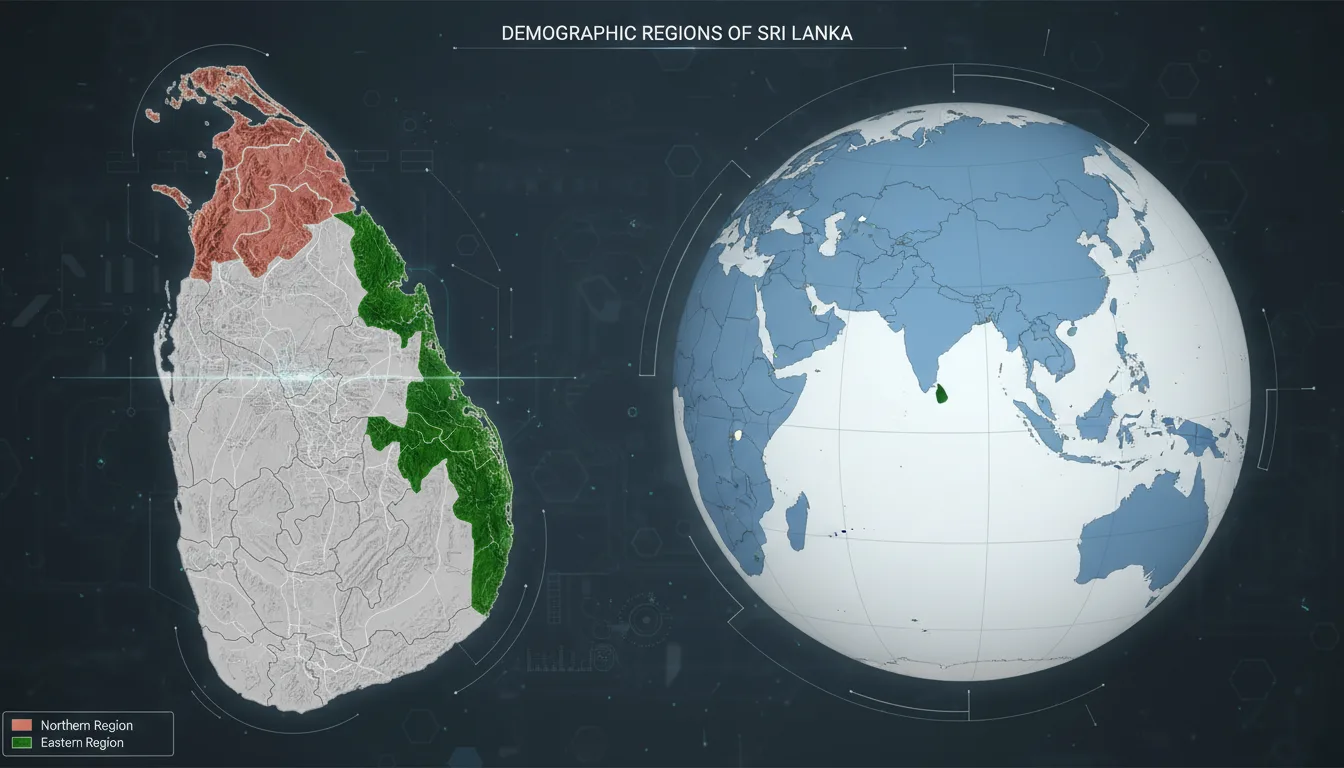
In the northern and eastern provinces of Sri Lanka — the land the Tamils called Tamil Eelam — seventy-six percent of the territory was under LTTE control. After the year 2000, the district of Kilinochchi became the administrative capital of Tamil Eelam — the beating capital of an unrecognised nation.
Though many countries labelled the Tigers a terrorist organisation, beyond those labels lived a dream — a separate homeland for the Tamil people: Tamil Eelam. Thousands gave their lives for that dream; thousands more lived for it alone.
But that dream drowned in blood and fire in 2009. The stories of the Tigers were largely buried — sometimes whispered only within the dark walls of camps, before fading into the sands of time.
Yet that era left an indelible scar on the history of Sri Lanka — a chapter in which a people's longing, a movement's power, and a nation's deepest fracture all dissolved into one.
The discipline and secrecy of the Liberation Tigers kept me from speaking while I was still in the struggle. But my journey of more than twenty-three years — victories and defeats, sacrifices and betrayals, joys and sorrows — must no longer be buried in the earth. It was that conviction which gave birth to these words.
This is not merely a collection of memories — this is the voice of a witness.
My Family — The Lifeblood of the Struggle
My family was deeply rooted in the struggle. My father refused to work for the state — that was his political declaration. Instead, he sowed knowledge in students; those seeds flourished and produced hundreds of engineers.
My mother was always called "Amma" — mother — by the fighters. Our home was known as the "Amma House" — not merely a house, but a refuge, a centre of feeling. The hunger strike she undertook alongside the martyred Lt. Col. Thileepan — unto death — is inscribed in the golden pages of history. But the inner beauty of that history — its pain and its courage — can only be seen through the eyes of someone who lived it as a fighter.
My sister. My brother —
They are living witnesses to the two greatest sorrows of my life — no, they are the very bodies of that sorrow.
In 1989, my sister's life was taken by the Indian military. She was swept away in the wave of betrayal unleashed by Mahattaya — the LTTE's deputy leader who had secretly aligned himself with the Indian government. Her death was not merely a personal loss; it was the quiet echo of a great betrayal that shattered countless dreams.
My brother's fate was no less dark. He was handed over by the ENDLF — a group that had joined hands with the Indian forces to crush the Tamil Eelam dream. Arrest, torture — he carried the burden of that betrayal in his body and soul. His silent suffering stands as the greatest testimony to the cruelties of that era.
When Karuna Amman — once the LTTE's senior commander — violated the movement's strict code of conduct, plundered its finances, and defected to the Sri Lankan government, my life was spared only by the thinnest mercy of fate.
Every betrayal tried to break me. But instead of breaking, those wounds made me stronger. With a dream that no bullet and no betrayal could destroy — with a purpose — I still stand.
What Does This Document Say?
Why did I join the movement? How did I become a fighter? What training, what missions? This document unfolds those answers across five phases.
Special forces, intelligence operations, finance, surveillance, politics — and even as coordinator within the Tamil National Alliance — I lived and breathed through many faces of the Tigers. Among these, the stories of undercover intelligence fighters are the most profound. They are nameless fallen heroes (Maaveerar) — even their deaths go unnoticed. To record their stories here is not only my duty, it is my debt.
This is not an ordinary autobiography. This is an insider's record of the Tamil Eelam liberation struggle — victories and defeats, heroes and traitors, joy and silence — a witness's account that tells everything as it truly was.
Some may ask — do these writings sow hatred? No. They sow truth.
That movement — built on the sacrifice of thousands of young people who renounced smoking, alcohol and moral corruption, who gave themselves entirely to the liberation of their people, who astonished the world with their discipline and unity — it was not merely a movement. It was a way of life. A dream. A fortress of principle. A human miracle the world gazed upon in wonder.
The faith that shone in the eyes of those who built it — a conviction unchanged even at the price of their lives — that can never be erased.
A great movement that rose with such discipline, such resolve, such sacrifice — how did it vanish from the map of this world?
On the day you learn the answer to that question — the weight of history will leave you standing in stunned silence. Only then will you understand: even destruction can sometimes occur with such order, such force.
Glossary for International Readers
Complete reference guide — Island of Tears
Section A — Key Terms
LTTE
Liberation Tigers of Tamil Eelam — an armed movement that fought for a separate homeland for the Tamil people; active from the 1970s until 2009.
IPKF
Indian Peace Keeping Force — Indian military force deployed in Sri Lanka from 1987 to 1990; came in the name of "peace" but left behind atrocities.
ENDLF
Eelam National Democratic Liberation Front — formed in 1987 with the backing of India's intelligence agency RAW. Betrayed LTTE fighters to Indian forces. Dissolved in 2011.
An organisation that, under the name of Tamil liberation, betrayed the very Tamils it claimed to represent.
Thileepan (Lt. Col.)
Political wing leader of the LTTE who fasted unto death in 1987 for the rights of the Tamil people.
Mahattaya
LTTE's deputy leader. Discovered in 1993 to have been secretly working with India's RAW; executed in 1994. The greatest betrayal from within.
Karuna Amman
Senior LTTE commander who defected to the Sri Lankan government. Symbol of the movement's internal fracture.
Tamil National Alliance (TNA)
Tamil National Alliance — coalition of Tamil political parties formed in 2001, serving as the voice of Tamils in the Sri Lankan parliament.
ITAK
TELO
EPRLF
ACTC · TULF
Standardisation Policy (1971)
Tamil students required 250/400 marks for university; Sinhalese students only 229/400. By 1974, Tamil university admissions fell from 27.5% to 7% — systematic ethnic exclusion from education.
Eelam — in Sangam Literature
The ancient Tamil name for Sri Lanka, found in literature more than two thousand years old — not merely a geographic name, but a symbol of Tamil cultural identity.
Section B — Global Comparisons
Ethnic discrimination → South African Apartheid
The systematic exclusion of Tamils from education, employment and governance mirrors the apartheid system endured by Black South Africans.
Dream of a homeland → Palestine / Kurdistan
The Tamil Eelam dream parallels the Palestinian or Kurdish struggle for a homeland — an unrecognised yet deeply living national identity.
Guerrilla warfare → IRA / Viet Cong
The LTTE's tactics are comparable to those of Ireland's IRA or Vietnam's Viet Cong — a small force confronting a far larger enemy.
Colonial fracture → India–Pakistan Partition
Just as British "divide and rule" split India in 1947, it also sowed deep divisions between communities in Sri Lanka.
Betrayal → WWII Collaboration
The treachery of Mahattaya and Karuna mirrors cases in Nazi-occupied Europe where trusted leaders collaborated with the enemy — betrayal from within always wounds more deeply than bombs from outside.
TNA → South Africa's ANC · Eelam → Greece's Hellas
As the ANC united multiple parties against apartheid, the TNA gave Tamil political parties a single voice. "Eelam" is to Tamils what "Hellas" is to Greeks — not just a name, but the symbol of an identity.
Section C — Key Tamil Terms
Maaveerar
fallen hero / martyr
Karum Pulikal
Black Tigers / suicide squad
Tamil Eelam
Tamil homeland / separate Tamil state
Eelam
ancient Tamil name for Sri Lanka
Thalaivar
The Leader / Supreme Commander (Prabhakaran)
Annan / Thambi
comrade / brother-in-arms