Hidden like a tear in the heart of the Indian Ocean lies a pearl — and its history too is written in tears. That pearl is Sri Lanka. From afar, it looks like a paradise of lush green — its mountains and paddy fields rich and fertile — yet beneath that beauty burned an unending fire: the deep fracture of ethnic conflict.
In Sinhala it is Sri Lanka, in Tamil, Ilankai — different names, but one land. Once celebrated as “The Granary of the East” and “The Pearl of the Indian Ocean”, its deep harbors and strategic location made it a geopolitical treasure — from the ancient Silk Route to modern maritime trade paths.
The island’s history stretches back over three thousand years. Known as Eelam in Sangam literature, the land shared deep cultural ties with southern India. In the earliest times, the Sinhalese and Tamils lived with a shared faith rooted in Saivism; the temple bells rang in harmony. But time carried the seeds of change.
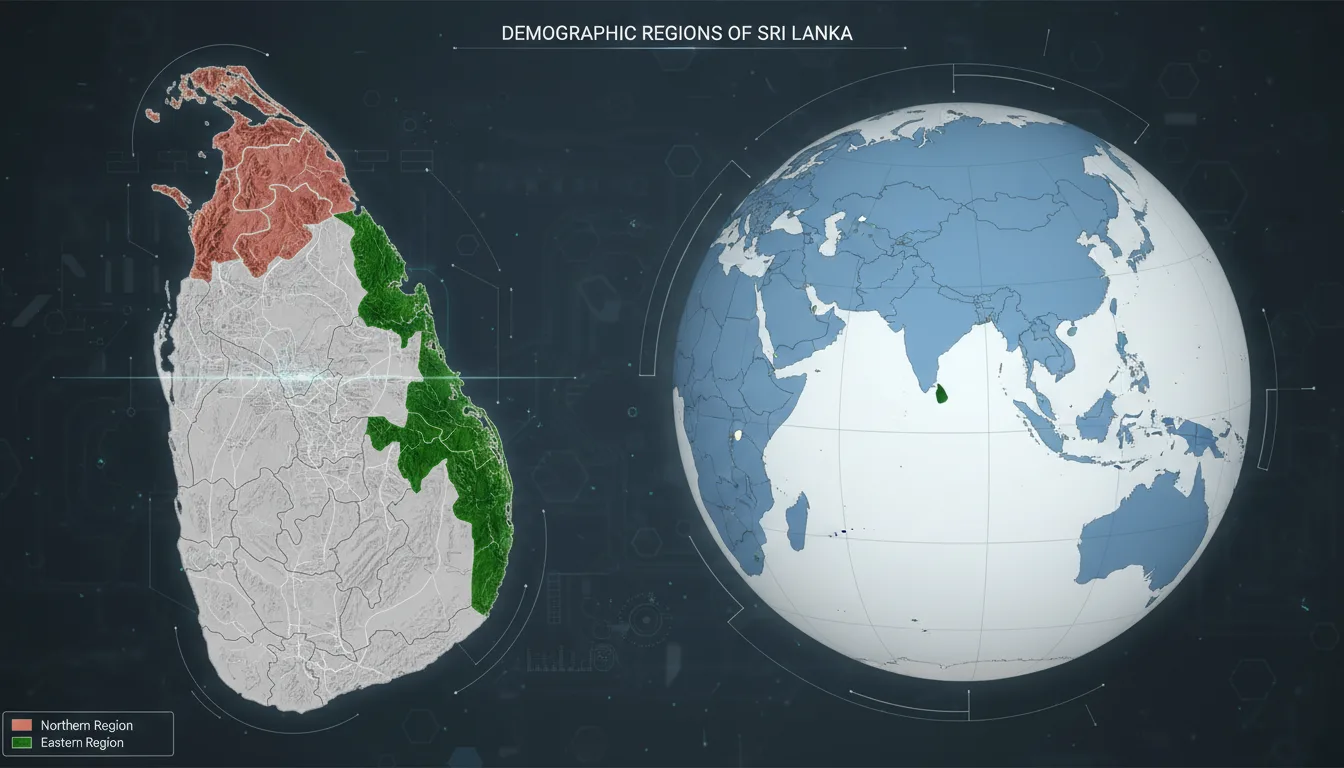
At the center of that change stood Devanampiya Tissa. Around 250 BCE, Mahinda Thera, the son of Emperor Ashoka of India, arrived at Mihintale to spread Buddhism. That day altered the destiny of the island. Mahinda’s words touched the king’s heart; Tissa embraced Buddhism. The Sinhalese followed, and from that moment, Sri Lanka’s path was forever changed.
Under Buddhism’s influence, the two ethnic groups slowly drifted apart. When Buddhism later declined in the Indian subcontinent, certain monks in Sri Lanka, fearing a similar fate, spread a misguided belief: that the only way to protect Buddhism was to oppose the Tamils living in the North and East. Thus began the false perception that Tamils were enemies of the faith — sowing the roots of a rift that deepened into religious, linguistic, and cultural divisions. It was the first spark of the fire that would one day consume the island’s heart.
Foreign invasions of Sri Lanka began long before 205 BCE and continued until 1409 CE — eleven invasions that each left their mark in blood and memory. Then came the shadow of colonialism. In 1505, the Portuguese arrived, followed by the Dutch, and then the British. In the name of trade, religion, and education, they reshaped the island’s very identity. Their policy was sharp and simple — “Divide and Rule.” They separated Sinhalese and Tamils, planting the seeds of a deep and lasting divide.
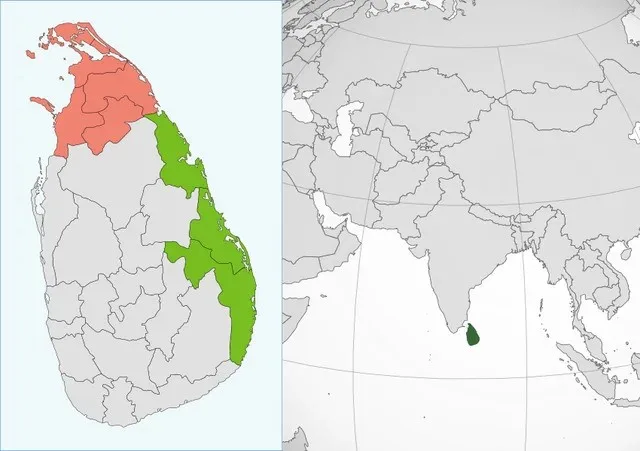
When Sri Lanka gained independence in 1948, the colonial fracture was still alive. Instead of healing it, the new rulers turned it into a political weapon. The slogan “One Nation – One Language” became a symbol of exclusion for the Tamil people. In education, employment, and administration, Tamils were slowly pushed out.
Oppressed and humiliated, they first turned to nonviolent struggle. But peace was shattered by deceit, suppression, and slaughter. Ethnic massacres became frequent — and there remained only one response: armed resistance.
In the early 1970s, from the dense jungles of the North, a new force emerged — the Liberation Tigers of Tamil Eelam (LTTE), led by Velupillai Prabhakaran (Karikalan).
This was not an ordinary armed movement; it was a struggle for identity — a people’s battle for their land, their language, their right to exist. Thousands of young men and women dedicated their youth to liberation. What began as a small guerrilla group evolved, under Prabhakaran’s disciplined leadership, into a full-fledged military and political organization.
With structured branches in the Army, Navy, and Air Force — along with departments for justice, finance, policing, and intelligence — the LTTE functioned as a de facto state.
The discipline and dedication of the Tigers astonished the world. Every fighter carried a cyanide capsule — surrender was not an option. Women fought shoulder to shoulder with men on the front lines. The Black Tigers, the suicide commando unit, became a symbol of fearlessness and ultimate sacrifice.
At one point, India — driven by its geopolitical interests — provided training and arms to the LTTE. But history took a tragic turn when India itself turned against them.
In 1987, under the Indo-Lanka Accord, the Indian Peace Keeping Force (IPKF) entered Sri Lanka, claiming to bring peace between Tamils and Sinhalese. But in the name of peace, they unleashed unspeakable violence on the very people they came to protect. Hospitals, schools, and homes were bombed. Thousands were killed; countless women were assaulted. By the time the IPKF withdrew in 1990, the Tamil people of the North and East were left scarred — body and soul. It was one of the darkest chapters in Sri Lanka’s modern history.
By the late 1990s, nearly 76% of the territory in the North and East (Tamil Eelam) was under LTTE control. Kilinochchi became the administrative capital of Tamil Eelam. Within its controlled areas operated the Bank of Tamil Eelam, Tamil Eelam Judiciary, Education Board, and Radio & Television Network — functioning with the structure of a self-governing nation.
Though many countries branded the LTTE a terrorist organization, within its core burned a single dream — an independent homeland for the Tamil people.
That dream ended in 2009, in blood and fire. The stories of the Tigers were buried — whispered only within the walls of old camps. Yet, their era left an indelible mark on history — a chapter where a people’s hope, a movement’s strength, and a nation’s division intertwined.
Bound by the discipline and secrecy of the movement, I could not tell my story while I lived within it. But after more than twenty-three years — of victories and defeats, sacrifices and betrayals, joys and griefs — I feel it must no longer remain untold.
My family was deeply intertwined with the struggle. My father, firm in his principles, refused to work for the state; instead, he sowed knowledge among students and found true purpose in that. My mother was known among the fighters simply as “Amma” — and our home came to be known as “Amma Veedu” (Mother’s House). She stood beside Thiyaga Theepam Dileepan (Lt. Col. Dileepan) during his historic hunger strike unto death — now immortalized in history.
But to truly see the depth of that history, one must see it through the eyes of those who lived and fought it — like mine. My sister and my brother — they are the living witnesses of the two greatest sorrows that have marked my life.
In the late 1980s, my sister’s life was claimed by the Indian army — a cruel ripple of the betrayal committed by Maththaya, then the deputy leader of the Liberation Tigers of Tamil Eelam, who had aligned himself with the Indian government. Her death was not just a personal loss; it was the quiet echo of a larger treachery that shattered countless dreams.
My brother’s fate was no less tragic. He was betrayed and handed over by members of the ENDLF — a group that had joined hands with the Indian forces to crush the Tamil people’s dream of Tamil Eelam. Captured and tortured, he bore the weight of that betrayal on his body and soul, his suffering becoming a silent testament to the cruelty of that time.
When Karuna Amman — once a senior commander of the Tigers — broke the movement’s strict moral code, looted its funds, and ultimately defected to the Sri Lankan government, my own life survived by nothing more than fate’s fragile mercy. Each betrayal cut deep, shaking the very core of who I was. And yet, instead of breaking me, those wounds only hardened my resolve — binding me even closer to the cause, to the dream that no bullet or betrayal could erase.
Why did I join the movement? How did I become a fighter? What training did I undergo? What missions did I take part in?
This document will reveal all of it — in five stages. From special operations, intelligence, and reconnaissance to education, politics, and finance — I lived through the many faces of the LTTE. Among them, the stories of undercover intelligence operatives are the deepest — nameless heroes whose sacrifices remain unseen. Telling their stories is my duty.
This is not a simple autobiography.
It is the inner chronicle of the Tamil Eelam liberation struggle — a truthful record of victories and defeats, heroes and traitors, joy and silence — all woven together into the living memory of a nation’s fight for freedom.
Sometimes, you may feel that these words do not sow hope for the future, but rather cast only the shadow of violence. Yet, there is something you may not know — this was a movement built upon the sacrifices of thousands of young men and women who devoted themselves entirely to the liberation of their people. They lived under strict discipline — forbidding smoking, alcohol, and any form of moral misconduct — and through their unity and self-control, they astonished the world.
It was not merely a movement; it was a way of life, a dream, a fortress of principles. And within the eyes of those who shaped it, there burned an unwavering faith — a conviction that did not falter even at the cost of their own lives.
How, then, did such a movement — born of discipline, strength, and sacrifice — disappear from the map of the world?
When you come to know the answer to that question, you too will stand stunned by the sheer weight of history. It is then you will realize — even destruction, at times, can occur with astonishing order and immense strength.
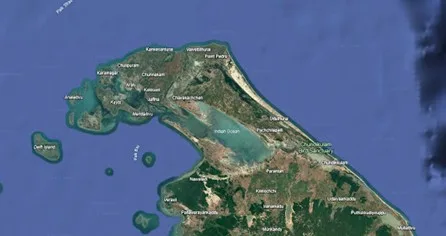
1. The Moment to Board the Boat
(Place: Valvettithurai · Year: 1988)
The shadow of dusk was slowly spreading over the island. The scent of salt drifted in from the sea, blending with the laughter of children echoing from somewhere nearby. It might have seemed like an ordinary evening — one of those sounds that made up the rhythm of island life — but that evening, my heartbeat carried a different rhythm: a mixture of dread and uncertainty. How long could a fifteen-year-old boy really keep escaping the army’s grasp and stay alive?
As usual, I had gone to meet Raghuvaran. He was staying in a house near the cinema — the home of the late Second Lieutenant Rambo Siva’s sister. That house always carried a strange silence; its walls seemed to hold a sadness wrapped in pride.
“Akka, is Raghuvaran here?” I asked.
“Not yet… he said he’ll come after picking up the reel,” she replied, walking toward the kitchen.
Just then, a strange mechanical sound tore through the air — sharp, metallic, unfamiliar. I peered through the crack in the door. A military jeep had stopped on the street. The next second, the Indian Army leapt into the yard.
My heart lurched. “Army!” I shouted, scrambling up the wall. My foot slipped; the broken glass shards on top of the wall cut deep into my fingers. Blood streamed down as I landed on the other side, breathless and shaking.
“One thought only — I have to survive.”
I sprinted across the street. Then suddenly, a realization struck me — maybe Raghuvaran was at Madavadi’s house! Without hesitation, I changed direction, darting through the Shiva temple path and pounding on Madavadi’s door. He wasn’t there.
“The army has come to Akka’s house!” I gasped, tying a handkerchief around my bleeding fingers as I stepped inside.
Exhausted from running, I peered through the narrow slit of the front door toward the main road. The sound of that same engine came again — closer.
“They’re coming here too,” I warned. I tried climbing the wall near the well, but my strength failed. Rambo Siva’s sister came running — her hands trembling, yet firm — and helped push me up. I managed to climb over, but couldn’t jump down this time; it was a shared wall. Jumping into the next yard meant running straight into the army.
So, thinking fast, I climbed onto the roof, crossed over a few houses, slipped through narrow alleys, and somehow reached the Revady beach by nightfall.
I already knew a boat was leaving for Chundikkulam that night. But when I got there, the place was deserted. Then I noticed, far out in the dark waters — a boat stranded, its engine failing.
Without thinking, I made a reckless decision. I plunged into the sea and began swimming toward it. The cold water bit into my bones; every wave that hit felt like it could stop my breath. There was no turning back now — only the will to move forward. When I finally reached the boat, I stretched out my hands to grasp its side. Relief washed over me — only to be shattered in the next second.
James Anna (Mayor James, then the Vadamarachchi commander) looked down at me and shouted, “Don’t pull him in!” He struck my hands off and pushed me back into the sea. My world splintered in that instant.
But Sivam Anna (Lt. Col. Sivam, known to everyone as Sivaththar) reached out, grabbed me, and hauled me aboard.
A heated argument broke out immediately — whether or not to take me along.
“Don’t bring him,” said James Anna.
“He’s been hunted by the army and swam all this way for his life — how can we abandon him in the sea?” argued Sivam Anna.
Just then, the engine sputtered back to life, and the argument faded. I looked toward the bow, where Appayya Anna (Lt. Col. Appayya, one of the senior members of the Tigers) was opening a food bag. The smell of idiyappam and chicken curry filled the air. “Eat,” he said quietly.
Even amidst that tension, his calmness — the simple act of eating — amazed me, and somehow brought me peace. I hadn’t eaten all day, so I joined him.
After I finished, Sivam Anna looked at me and asked,
“Ever been at sea before?”
“No… but I can swim,” I replied with confidence.
“How far can you swim?”
“Even if you throw me overboard here, I’ll reach the shore,” I said.
James Anna chuckled. “Then maybe we should throw him overboard,” he joked.
I looked him straight in the eye and said, “I’m done running. I’m not going back to shore anymore.”
He nodded slowly. “Alright then… you’re going to suffer a lot,” he said calmly.
We had to wait until midnight to set sail — that was when the Navy’s patrols would thin out. The sea tossed and rolled us relentlessly, and nausea hit me hard. It was my first time at sea; my head spun, my stomach churned. James Anna’s words — you’re going to suffer a lot — kept echoing in my mind.
The boatman noticed and said, “Rinse your mouth with seawater — it’ll stop the vomiting.” I did as he said; he was right, though the dizziness stayed.
After midnight, the boat finally began its journey.
A few hours later, the engine got tangled in a fishing net. The boat stopped. While the men worked to cut it free, I felt sick to my core. Some of the fighters joined in to help the boatman, and soon the boat moved again.
Dawn began to bloom on the horizon. The silhouettes of palm trees appeared in the distance, and my heart swelled with relief. The sun climbed higher. We had reached the shore.
Armed cadres were waiting for us. When I stepped off the boat, the sand embraced my feet. My body gave way — I collapsed onto the earth, pressing my face into the sand, whispering to myself, “I will never again run in fear of the army.”